


Dholera Smart City vs Traditional Metro Real Estate: Why Future Investors Are Shifting Early
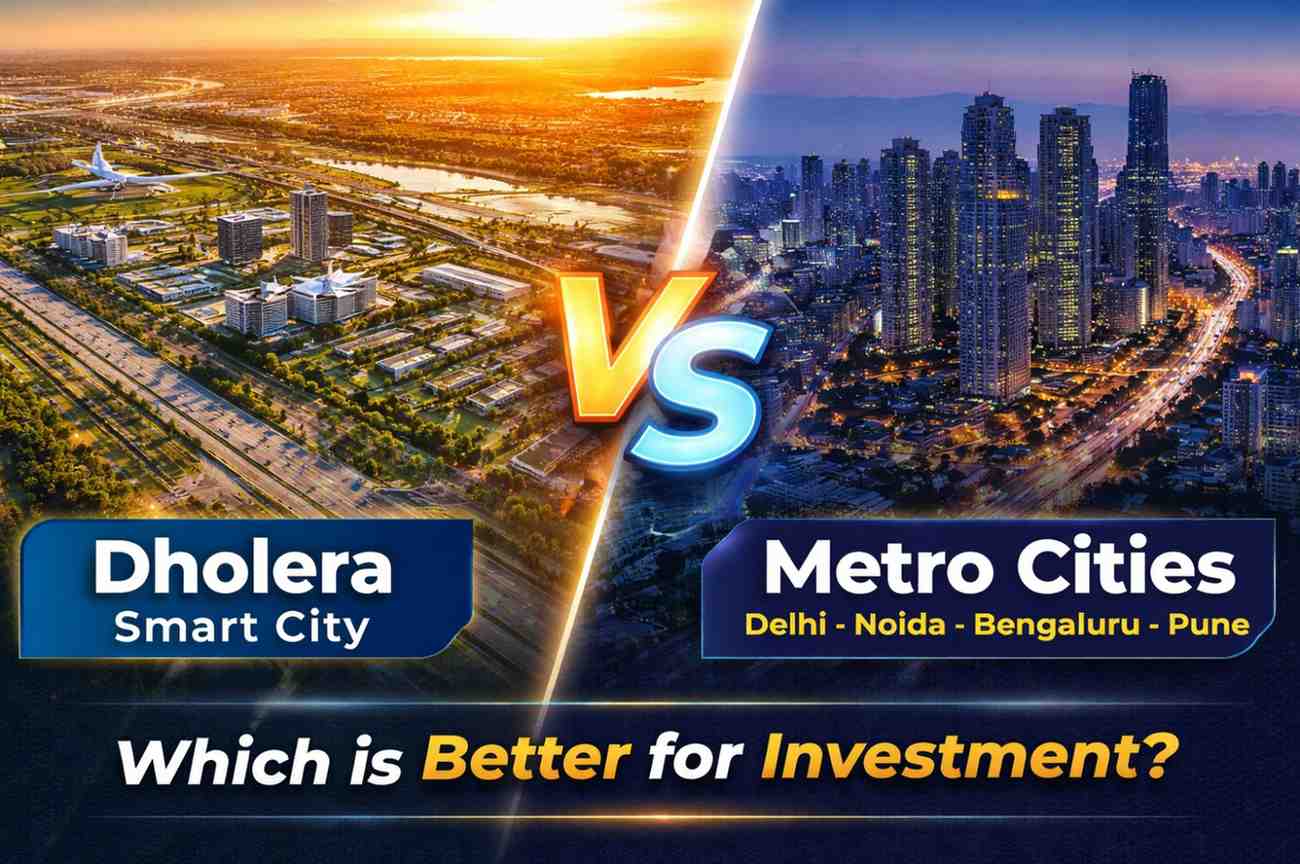
For decades, Indian real estate investors have relied on metro cities like Delhi NCR, Noida, Bengaluru, and Pune. However, with rising property prices and market saturation, investors are now shifting focus toward future-ready smart cities like Dholera.
For years, metro cities have been considered safe investment destinations due to developed infrastructure and employment opportunities. However, high entry costs and limited appreciation have raised a critical question — is real wealth still created in saturated markets?
This shift in investor mindset has brought Dholera Smart City into focus as a long-term investment alternative.
Understanding Traditional Metro Real Estate
Delhi NCR and Noida are mature markets where property prices have already peaked. While they offer stability, the scope for exponential growth is limited.
Bengaluru continues to attract IT professionals, but traffic congestion, rising land prices, and infrastructure pressure have slowed growth. Pune remains stable, but it is no longer a high-growth market.
Investors in metro cities are largely paying for past growth, not future expansion.
What Makes Dholera Smart City Different
Dholera Smart City is India’s first Greenfield Smart City, developed with infrastructure planned before population growth.
The city features wide roads, underground utilities, smart zoning, flood-resistant planning, and industrial-residential segregation — a rarity in Indian urban development.
Entry Price Advantage for Investors
- Metro city properties typically start from ₹60 lakhs to ₹1 crore+
- Dholera residential plots available from ₹12–20 lakhs
- Lower risk with higher long-term appreciation potential
Growth Stage: Mature vs Emerging Markets
Metro cities have crossed their high-growth phase, resulting in gradual appreciation over time.
Dholera is currently in its early growth phase, supported by active infrastructure projects like the Dholera International Airport , expressways, and industrial corridors.
Infrastructure & Economic Drivers
Traditional cities suffer from retrofitted infrastructure, while Dholera benefits from integrated urban planning.
- Dedicated industrial & manufacturing zones
- Logistics and semiconductor-related industries
- Large-scale employment generation
- Increased housing and commercial demand
Return on Investment Outlook
High investment costs and moderate appreciation in metro cities often limit overall returns.
Dholera Smart City offers a different equation — affordable entry, government-backed development, and strong long-term ROI over a 7–10 year horizon.
Final Verdict: Traditional metro cities suit rental-focused investors, but for capital appreciation and early-mover advantage, Dholera Smart City is the smarter choice.
 Whatsapp