



Beyond Rs 76k-crore: Government to scale up semiconductor package
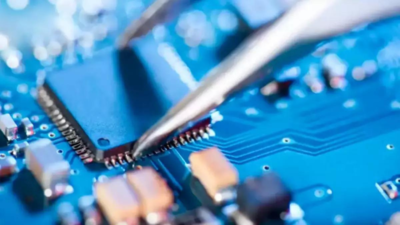
With the existing Rs 76,000-crore incentive scheme nearly exhausted, the government is preparing a significantly larger semiconductor support package to attract fresh investments into chip manufacturing.
The government is planning to roll out a new multi-billion-dollar incentive package for semiconductor companies after almost fully utilising the Rs 76,000-crore scheme launched in December 2021, according to senior officials familiar with the matter.
Preliminary work on the new package—expected to be substantially larger than the previous one—has already begun. However, formal announcements are likely only after the formation of the new government following the national elections.
Officials said the expanded package will be taken up on a priority basis, as several semiconductor proposals are at advanced stages and require immediate clarity on incentive support. The matter is expected to be placed before the new Cabinet once it assumes office.
The success of the 2021 scheme has prompted the government to scale up support, particularly as countries such as the United States and China continue to offer aggressive incentives to semiconductor manufacturers. Under the current policy, the government provides fiscal support of up to 50% of project costs for eligible semiconductor and display fabrication units.
India’s semiconductor ambitions gained momentum after Micron Technology announced a Rs 22,500-crore testing and packaging unit in Gujarat in June last year—marking the first major global player to enter India’s chip ecosystem.
This was followed by approvals for three major proposals worth nearly Rs 1.3 lakh crore. These include a Rs 91,000-crore semiconductor fabrication plant by Tata Electronics in partnership with Taiwan’s Powerchip Semiconductor Manufacturing Corp at Dholera in Gujarat.
Other approved projects include a Rs 27,000-crore Semiconductor Assembly and Test (TSAT) unit by Tata in Assam and a Rs 7,600-crore project by CG Power in collaboration with Japan’s Renesas Electronics and Thailand’s Stars Microelectronics.
The government has also received fresh proposals at advanced stages of discussion, including India’s first display fabrication unit by Japan’s Sharp, with potential investments of up to Rs 40,000 crore, and a Rs 90,000-crore investment plan by Israel-based Tower Semiconductor.
Officials noted that timely decisions on incentives will be critical to keep India competitive in the global semiconductor race and to ensure that large investors receive policy certainty as they finalise their India expansion plans.
 Whatsapp